Homemade Tomato Sauce, Easier Than You Think!

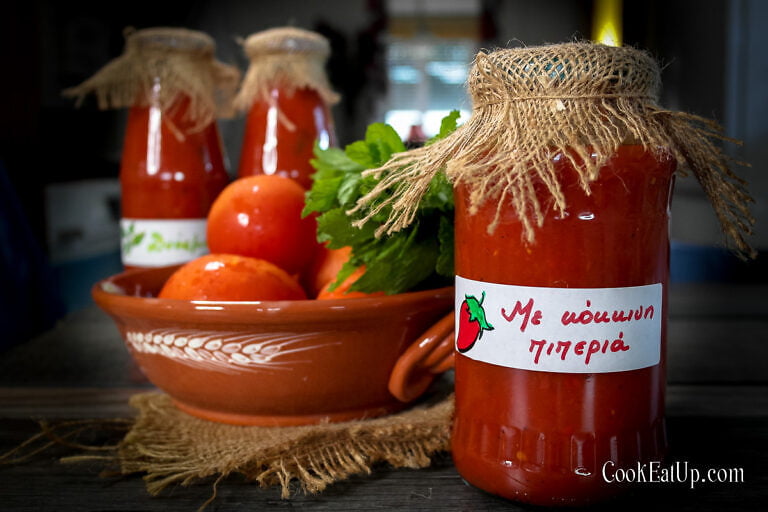
I don’t know about you, but I simply can’t imagine life without tomato sauce. Not only does it give a distinctive character to simple dishes like pasta, meatballs, and “strapatsada“ which is Greek scrambled eggs with tomatoes, but it is also an essential ingredient in countless traditional Greek recipes, from vegetable-based dishes to rich tomato-braised meals.
A good summer tomato, sweet and full of aroma, can transform even the simplest recipe into something truly special. That is exactly what you can achieve by making your own tomato sauce for the winter. At the same time, you avoid the preservatives, artificial colorings, and often sour, artificial taste that many store-bought sauces contain.
And if you think making tomato sauce is a lot of work, I won’t disagree with you. However, today I’ll show you how to prepare your winter supply of tomato sauce easily, quickly and without turning it into a major project. In fact, the method I’m about to share has another very important advantage.
Lycopene and the Benefits of Tomato Skins
The inspiration came from an article I read by Professor Dimitris Kouretas, who explained that lycopene, one of the most valuable compounds found in tomatoes, is concentrated in the skin and becomes even more beneficial when tomatoes are cooked. Curious about this claim, I did some research of my own and confirmed the information while also learning more about the remarkable health benefits of lycopene.
You can find countless scientific articles on the subject, but to summarize:
“Homemade sauces made with ripe tomatoes contain up to six times more lycopene than fresh tomatoes. The heat used during cooking breaks down the cells in the tomato skin, allowing lycopene to be absorbed more efficiently by the digestive system. As part of the nutritional profile of tomatoes, lycopene has been associated with positive effects on the immune system, bone health, diabetes management, and protection against certain aging mechanisms.”
Thankfully, There’s an Easier Way
By keeping the tomato skins, we immediately eliminate the most time-consuming and difficult part of the process. If you have never made tomato sauce before, you should know that the traditional method requires passing huge quantities of tomatoes through a special machine that separates the skins, filling large bowls with purée and usually creating quite a mess unless you have an outdoor workspace.
Without such a machine, the alternative is to blanch the tomatoes, dipping them briefly into boiling water and then transferring them to ice water so the skins can be removed easily. And of course, there is always the blender method, processing small batches one at a time. Let’s just say I’ve spent enough years doing that!
So what do we do instead? Something much simpler. We cut the tomatoes directly into a large pot and, once they have softened, blend everything right there using an immersion blender. No extra bowls, no extra equipment, and very little cleanup. Once the sauce has finished cooking, we simply transfer it to jars.
That’s it! Don’t tell me you still think making homemade tomato sauce is a heroic achievement, because I might have to disagree with you! 🍅😊

🎬 Watch the full recipe video on YouTube and subscribe to my channel for more delicious recipes!
English subtitles are available.
🛒Ingredients
- 🍅 25 kg Roma tomatoes
- 🌶️ 10 kg red peppers
- 🧂 50 g coarse salt
- 🍬 50 g sugar
- 🫒 1 cup olive oil
🔸These quantities filled a very large stockpot four times (40 cm high and 30 cm in diameter) and yielded approximately 25 liters of tomato sauce.
👩🍳Instructions

Adding red peppers is optional, but they give the sauce an incredible sweetness and depth of flavor. For the best result, roast them first rather than adding them raw.
Wash the peppers, remove the stems and seeds, and place them on a baking tray lined with parchment paper. Roast them at 200°C for about 45 minutes, until they soften and their skins begin to blister and darken. Allow them to cool and peel them as much as possible.
🔸 You will often read that if you place the hot roasted peppers in a bag and let them cool there, they will peel more easily. Personally, I’ve found that if a pepper doesn’t want to peel, no bag in the world is going to save the situation! Luckily, that’s not a problem for us. Any skin that remains will be blended into the sauce and disappear completely. So don’t waste precious pepper flesh trying to achieve perfection. Leave the skin on and let the immersion blender do the rest.
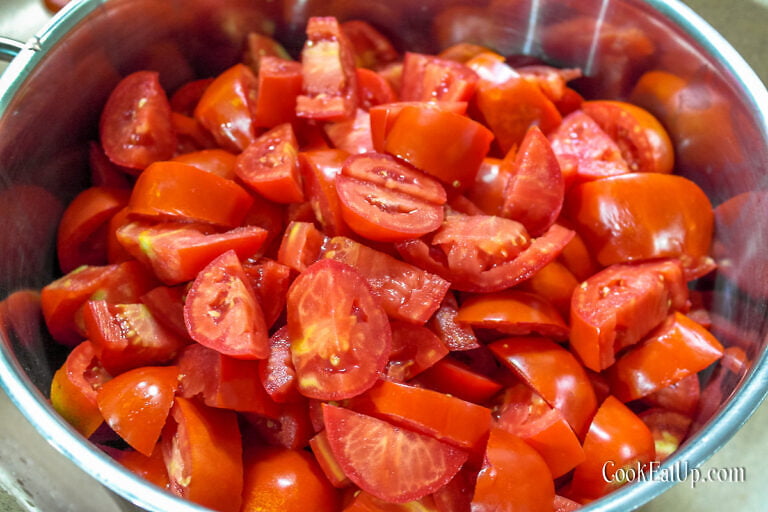
Wash the tomatoes thoroughly and cut them into 4 or 6 pieces. Fill a large stockpot to the top with the tomatoes and place it over medium heat. Stir occasionally until the tomatoes begin releasing their juices. Once they become juicy, add the salt and sugar.
Continue stirring and, when the tomatoes have softened, add the roasted peppers. Blend everything directly in the pot using an immersion blender. Simmer the sauce for about 30 minutes, or until it reaches your desired consistency. Remove the pot from the heat and stir in the olive oil.

Transfer the sauce into sterilized jars, seal them tightly, and turn them upside down until completely cooled.
How to Sterilize the Jars
Place clean, dry jars and lids on a baking tray lined with a clean kitchen towel. Sterilize them in a preheated oven at 120°C for 15 minutes.
Fill the jars while they are still hot, seal them tightly, and turn them upside down until completely cooled. If any jar leaks, store it in the refrigerator and use it within a short time.
Tomato Sauce with Different Flavors
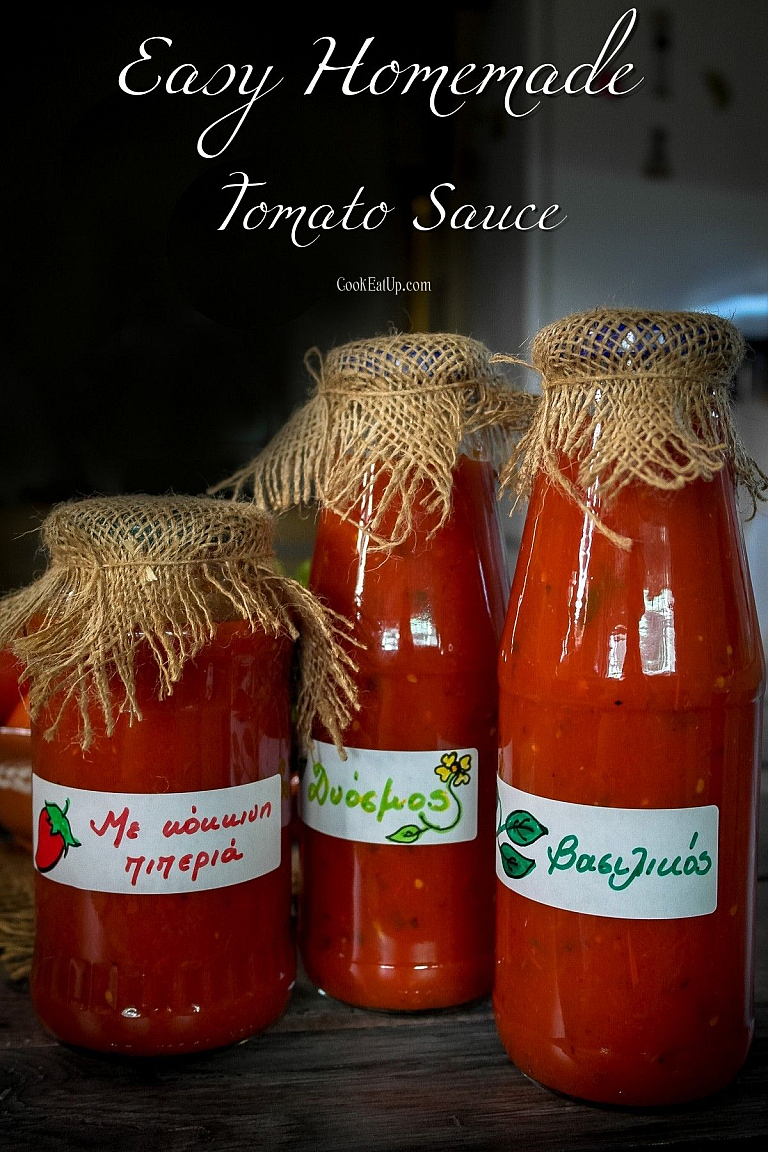
You can customize the sauce with your favorite herbs and seasonings. Basil, mint, garlic or hot peppers are all excellent choices. Add the herb leaves without chopping them, as the immersion blender will do the work for you.

I usually add basil and mint ♫ yarem yarem ♪ because I like having my favorite summer aromas already infused into the sauce throughout the winter. The reason I choose these two herbs is not the famous song, but a purely practical one. Fresh basil and mint are not always easy to find during the colder months, so I prefer to preserve them in the sauce. This way, the fresh aroma of mint is always there for my stuffed vegetables, while basil is ready to enhance my pasta dishes and homemade pizzas.
Make Your Life Easier…
🔸 You can also sauté onions and add them to the sauce along with parsley. This creates a ready-made base for many traditional Greek vegetable dishes, saving you valuable time both in the kitchen and at the grocery store.
🔸 There’s no need to prepare your entire winter supply of tomato sauce in one go, nor do you have to wait for Roma tomatoes to appear. You can make one batch at a time throughout the summer, using any ripe and flavorful tomatoes you have available.
🔸 You can also roast peppers throughout the summer and freeze them in portions. When it’s time to make your tomato sauce, they’ll already be prepared, saving you a considerable amount of time and effort.
🔸 If you blend the sauce with an immersion blender before it has finished cooking, be prepared for… Mount Vesuvius! As the sauce thickens, it bubbles vigorously and can splatter everywhere. If you already know how thick you want the sauce to be, you can complete the cooking first and blend it at the very end. This will save you quite a bit of mess and cleanup.
🔸 After blending, a few tomato seeds may remain in the sauce. Personally, they don’t bother me at all, but if you prefer a smoother, silkier texture, simply blend the sauce for a few seconds in a small blender or food processor after opening the jar. The seeds will almost completely disappear.
Two Useful Tips to Avoid Making a Mess

To fill jars easily, use a wide-mouth funnel. Special canning funnels are now widely available, but if you happen to have a similar funnel from a dishwasher salt container, like I do, it works just as well.

To prevent drips while transferring the sauce, fill the ladle and briefly touch its underside back to the surface of the sauce before moving it to the jar. Not a single drop will fall. The same trick works wonderfully with soups as well.
May your kitchen be filled with the aroma of tomatoes all winter long!
Nanà…✍️